

There’s a word that quietly slipped into creative circles, classrooms, and entrepreneurial meet-ups—Labarty.
Some people treat it like a trend. Others think of it as a style. A few see it as a method.
But over time, it’s grown into something deeper: a mindset that blends experimentation, collaboration, and celebration into one living, breathing process.
We’ve watched this concept take shape across studios, digital communities, art labs, and even late-night brainstorming sessions where ideas move faster than coffee mugs.
And the more we studied it, the more we realized—Labarty isn’t just a word. It’s a way of working and creating that brings people together.
This guide walks through everything we’ve learned, seen, practiced, and documented about Labarty.
With real stories. With actionable ideas. And most importantly, with the raw human tone that Labarty itself encourages.
What Exactly Is “Labarty”?
The simplest way to say it: Labarty = Lab + Party.
It’s that space where people dive into creativity not with stiff rules but with openness, curiosity, and a bit of play.
Think of it as:
- A lab, where you experiment, try, fail, try again
- A party, where the energy stays alive, ideas flow, and people feel free
But that definition barely scratches the surface.
Labarty has been evolving into a format that creators, teachers, businesses, and even researchers use to bring life to their work.
Some compare it to a hackathon.
Some see it as a coworking ritual.
Others treat it like a creative festival.
The truth? Labarty is flexible, because its heart lies in the people who practice it.
Why Labarty Matters Today
We’re living in a world overflowing with information but starving for meaningful collaboration.
Teams feel burnt out. Creators feel stuck. Students feel boxed into old frameworks.
Labarty disrupts that.
It reminds us that experimenting should feel fun
and that breakthroughs don’t happen in silence—they happen in shared moments, excited voices, messy whiteboards, and “What if we tried this…?” questions.
We’ve seen it reshape:
- Team workshops
- Brand-building sessions
- Student group projects
- Innovation labs
- Digital creator communities
And the results stay consistent:
People leave energized, connected, and filled with ideas they didn’t expect.
The Core Pillars of Labarty
Every group shapes Labarty in their own way, but across the board, we’ve noticed four foundations that keep showing up.
1. Curiosity Over Perfection
In a Labarty space, nobody pretends to be “done.”
Ideas stay fluid. Questions lead the way. Mistakes are part of the recipe.
You hear things like:
- “Let’s try it and see.”
- “What if we flip this around?”
- “No wrong answers—just directions.”
The room breathes experimentation.
2. People Before Products
Labarty keeps people at the center.
Not KPIs, not deliverables, not deadlines.
When people feel seen and welcome, ideas naturally grow.
During one of our own sessions, a quiet team member sketched something on the edge of a scrap paper.
That tiny doodle ended up becoming the centerpiece of an entire campaign.
This is how Labarty works—people spark each other.
3. Energy as a Creative Tool
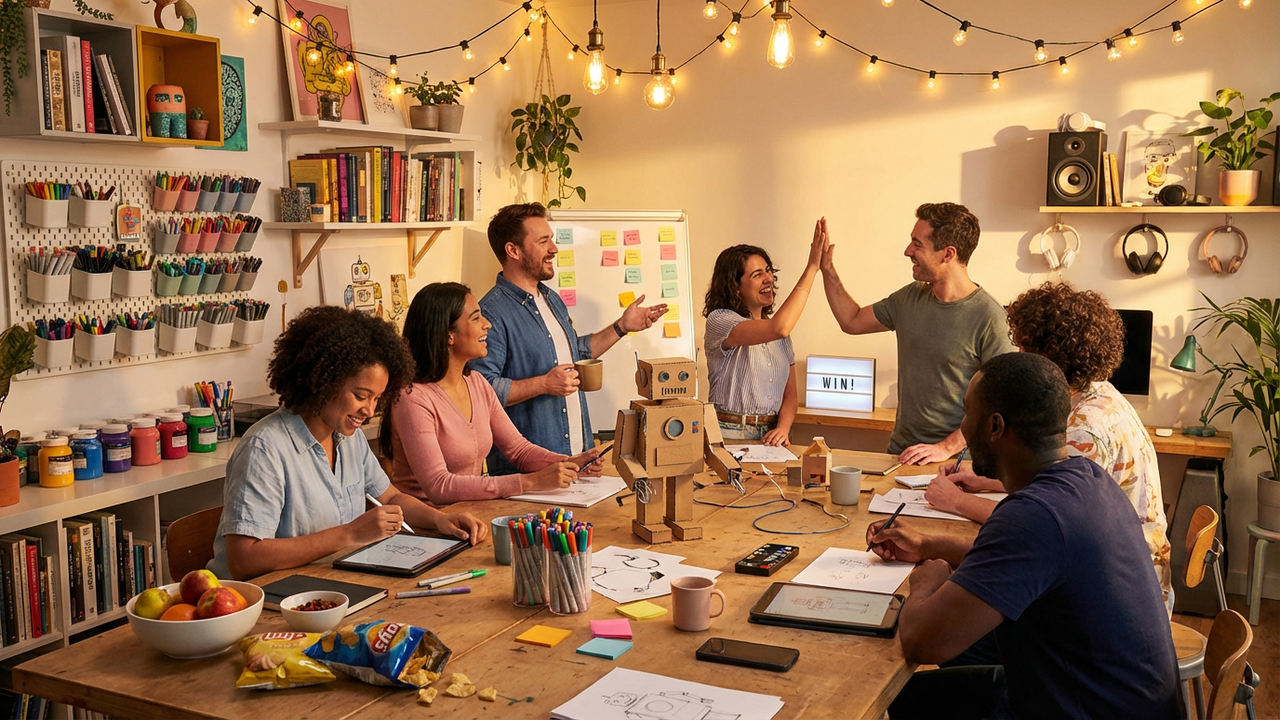
A Labarty session doesn’t feel like a meeting.
It feels alive.
Music playing softly.
Snacks on the table.
Markers everywhere.
Someone talking while someone else builds a prototype with craft supplies.
The energy fuels ideas that can’t survive in cold conference rooms.
4. Shared Wins, Shared Lessons
There’s no “I told you so.”
No ego battles.
Everything is collective.
When something works, everyone celebrates.
When something fails, everyone laughs and writes down what they learned.
It’s the opposite of the pressure-heavy environments that shut people down.
How Labarty Started Becoming a Movement
Labarty didn’t appear out of a textbook. It grew from people who were tired of rigid systems.
We first heard the term in a creative studio where designers gathered every Friday night.
They’d bring their own experiments, share music, build small prototypes, collaborate, chat, eat, test ideas, and simply let creation happen.
Someone joked, “It’s like our lab party—our Labarty,” and the name stuck.
Since then, the concept has traveled through:
- Digital creator groups
- Startup incubators
- Art residencies
- Virtual co-making spaces
- University innovation hubs
And every community shaped it in its own way.
Some made it weekly.
Some turned it into events.
Some built entire brand identities around it.
Today, it’s evolving so fast that even we learn new forms of it through communities we document.
Creating Your Own Labarty Session
You don’t need a fancy space.
You don’t need a huge group.
You don’t even need a plan.
Just these basics.
Step 1: Set a Theme (But Keep It Loose)
This could be:
- “Let’s explore color today.”
- “Build something useless but fun.”
- “Ideas for our next product.”
- “Free creativity—no rules.”
Themes guide, not restrict.
Step 2: Build the Atmosphere
This matters more than people think.
Light music.
Good snacks.
Open tables.
Colorful markers.
Maybe a random prop as inspiration.
Energy shapes creativity.
Step 3: Let the Work Flow Naturally
Some talk.
Some draw.
Some build.
Some take notes.
No forced structure.
No “Let’s go around the room.”
Let things happen.
Step 4: Capture the Magic
Take pictures.
Record voice notes.
Save sketches.
Capture quotes people say.
Labarty produces gold that shouldn’t disappear.
Step 5: Share & Celebrate
The celebration is part of the formula.
Laugh.
Highlight breakthroughs.
Thank everyone.
Celebrate small wins loudly.
Real-Life Examples Where Labarty Works
1. In Creative Agencies
We’ve seen agencies using Labarty to refresh brand directions when teams feel stuck.
Those sessions often lead to new fonts, campaign ideas, or storylines that become the backbone of major work.
2. In Startups
Founders use Labarty sessions to rethink product features, explore user problems, or test prototypes.
The informality frees people to challenge assumptions.
3. In Classrooms
Teachers run Labarty-style activities to make learning hands-on.
Students respond with more engagement and curiosity, especially in design, science, and tech subjects.
4. In Remote Teams
Virtual Labarty rooms are becoming common—digital whiteboards, music playlists, breakout rooms.
These sessions help teams feel human again.
The Psychology Behind Labarty
It turns out, the concept taps into several science-backed principles:
Play Enhances Problem-Solving
Play reduces fear of failure, increases dopamine, and triggers creative pathways.
Labarty taps into this beautifully.
Social Creativity Outperforms Solo Work
People build off each other.
Unexpected combinations form.
Ideas multiply.
Environments Shape Outcomes
Warm, playful spaces produce better innovation than stiff, hierarchical ones.
Labarty builds the perfect creative environment.
Celebration Boosts Motivation
Shared joy improves group chemistry and idea retention.
No wonder Labarty is becoming a preferred method in so many innovation-driven spaces.
Why Brands Are Adopting Labarty
We’ve seen brands blending Labarty into:
- team retreats
- customer co-creation events
- ideation workshops
- internal innovation labs
- product-testing gatherings
It’s cheaper than traditional workshops, more natural than brainstorming sessions, and far more effective.
The result?
Better ideas.
More ownership.
Stronger culture.
Companies like IDEO have long championed creativity through human-centered frameworks, and Labarty aligns with similar principles of experimentation and collaboration. You can explore some of their design thinking insights at the IDEO U website: IDEO U.
Advanced Labarty Formats
As communities expand, Labarty is taking new shapes.
Sprint Labarty
Short, energetic bursts focused on a specific challenge.
Open Labarty
Anyone can join.
People bring different backgrounds—designers, coders, storytellers, engineers.
Digital Labarty
A virtual version using tools like:
- Miro
- FigJam
- Gather
- Zoom breakout rooms
Silent Labarty
No talking.
Only making.
Strangely powerful.
Night Labarty
Usually starts late.
Runs on snacks and music.
Often leads to unexpected breakthroughs.
How Labarty Helps Teams Build Culture
Labarty naturally encourages:
- trust
- belonging
- shared creativity
- emotional safety
- team bonding
When people create together, the relationship shifts.
Walls lower.
Voices open up.
And ideas get braver.
Teams become more human.
More connected.
More innovative.
Is Labarty Right for You?
If you:
- crave fresh ideas
- want to spark collaboration
- feel stuck in traditional methods
- want creativity to feel fun again
…then yes.
Labarty might be exactly what your space needs.
Whether you’re an artist, a teacher, a business leader, or a student, you can shape Labarty around your goals.
It grows with you.
It adapts with you.
It evolves with the people who join it.
Frequently Asked Questions About Labarty
What makes Labarty different from brainstorming?
Brainstorming is structured.
Labarty is fluid, playful, and human-centered.
Ideas emerge naturally—not forced.
How long does a Labarty session last?
Anywhere from 1 hour to an entire evening.
There’s no strict timing.
Do you need special tools?
No.
Paper, markers, objects, or digital boards are enough.
Can Labarty work for serious business problems?
Absolutely.
In fact, Labarty often generates solutions that rigid formats suppress.
Is Labarty only for creative professions?
Not at all.
We’ve seen it used in healthcare, engineering, education, and even finance teams.
Final Thoughts
Labarty isn’t just a creative buzzword.
It’s a culture, a mindset, a living process that brings people into a space where imagination feels natural again.
And once you try it—once you feel that blend of freedom, curiosity, and shared energy—it’s hard to go back to traditional methods.
If you ever needed a sign to create your own Labarty session, this is it.
Bring people.
Bring ideas.
Bring snacks.
And let the magic happen.
