

Introduction — Why China’s Underground Hub Matters in 2025
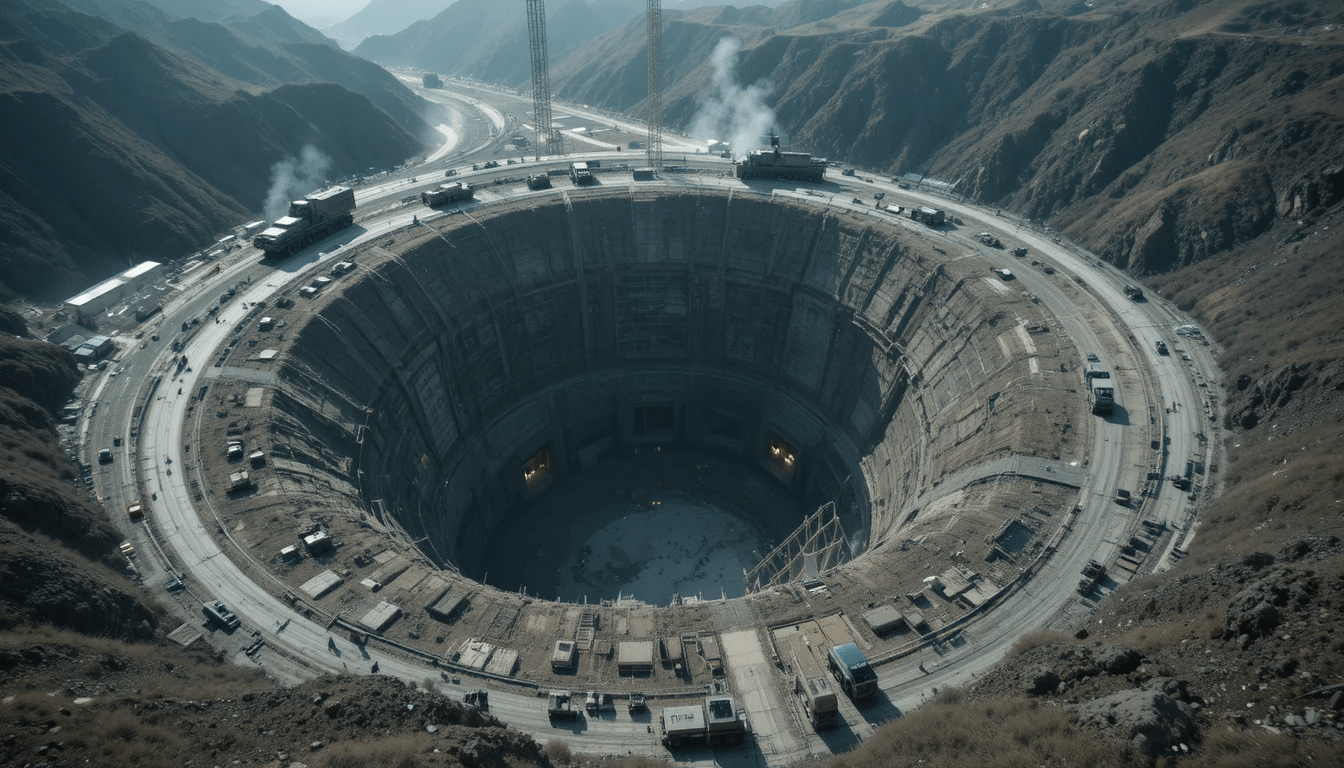
The first time I saw those new satellite images, I had that weird mix of fascination and unease. You know that feeling when something looks both incredible and unsettling? That’s exactly what these recent photos stirred up. Quiet mountains outside Beijing suddenly showed signs of something massive happening under the surface — digging, reinforced shafts, and networks that didn’t look like any regular construction project.
And that’s why global powers are paying attention right now. The scale is huge, the timing is sensitive, and the secrecy around it is… well, honestly, it’s the kind of mystery that keeps analysts awake at night. People keep calling it china underground military hub construction, but to be blunt, nobody knows the full story yet. What we do know is that this isn’t some small bunker. It looks like a whole underground world taking shape.
Background — China’s History of Underground Military Bunkers
Cold War underground cities
China didn’t just wake up one morning and decide to build deep underground facilities. This habit goes way back. During the Cold War, entire underground cities were carved out as shelters against nuclear threats. Millions of citizens knew about the “underground Beijing” — a backup city hidden beneath the real one.
Western Hills command network
Then came the Western Hills project: a rumored network of tunnels, reinforced command rooms, and emergency escape routes designed to protect leadership during a crisis. Even though half of it was never officially acknowledged, it shaped China’s taste for going underground.
How China’s doctrine evolved to subterranean warfare
Over the years, the doctrine changed. Instead of relying only on surface military bases, China leaned into the idea that the safest place in a modern war isn’t on land — it’s under it. So the idea of a huge china underground military hub construction isn’t really shocking. It’s more like the next chapter in a long story
Latest 2025 Satellite Evidence Reveals Massive Construction Activity
Exact location, size (1,500 acres), coordinates
These new images point to a location west of Beijing, spread across roughly 1,500 acres. The area used to be quiet — plain hills, a few access roads, nothing unusual. Now? It looks like someone pressed fast-forward on a secret megaproject.
Tunnels, ventilation shafts, deep excavation pits
You can see wide tunnel mouths carved into the mountains. There are ventilation shafts spaced with perfect military precision. And those excavation pits… they’re deep enough to swallow multi-story buildings.
Growth timeline (2023–2025)
Between late 2023 and early 2025, the area changed faster than any civilian project would. Every new photo shows more reinforced walls, more sealed entrances, and more signs that whatever is happening is meant to survive a worst-case scenario.
Comparison: 10× size of the Pentagon
Some analysts even claim the underground footprint could end up ten times the size of the Pentagon. And honestly? Looking at the visible markers, that doesn’t sound far-fetched for a large-scale china underground military hub construction effort.
How the New Underground Hub Fits China’s Military Strategy
Wartime command center possibility
If you imagine a wartime scenario, where would China want its most important leaders and military systems? Not above ground. Not in Beijing. Deep under reinforced rock makes the most sense.
Nuclear survivability and continuity of government
There’s a growing belief that this hub is designed to protect strategic leadership if nuclear tensions ever escalate. It matches the idea of a “continuity of government” base — built to operate when everything above ground is chaos.
PLA modernization targets for 2027
China keeps talking about its 2027 modernization deadline. Building such a huge underground system fits perfectly into that timeline. So whether you call it a shelter, a command center, or part of a broader china underground military hub construction strategy, it aligns with where China wants its military to go.
Technical Architecture — What an Underground Military Hub Requires
Blast-resistant tunnels
A facility like this needs tunnels that can withstand massive pressure. You can almost imagine the engineering teams calculating shockwaves and testing structural layers.
Hardened communication lines
A deep military hub is useless without secure communication. Fiber-optic lines, hardened relay stations, redundant signal routes — this is the kind of architecture buried beneath these hills.
Deep earth shielding for nuclear scenarios
The deeper the base, the more protection it offers from nuclear blasts. The depth seen here suggests nuclear survivability was one of the main goals in this china underground military hub construction effort.
Subsurface logistics & ventilation systems
Fresh air is life. Subsurface logistics matter too — emergency fuel, food, water, and rapid transport tunnels. Signs of all these components appear around the construction footprint.
Why China Chose This Location — Geographic & Strategic Benefits
Proximity to Beijing leadership core
It’s close enough for fast access, far enough for safety.
Mountainous shielding advantages
Mountains offer natural protection. They hide, they shield, and they silence what’s happening beneath them.
Limited visibility to foreign satellites pre-2024
Before clearing and digging started, dense terrain made it harder to detect early phases of the project.
Global Reactions — What Analysts and Governments Are Saying
U.S. intelligence views
U.S. analysts believe this could be a wartime headquarters, potentially tied to nuclear strategy.
Taiwan and Japan concerns
Taiwanese officials openly worry that this kind of china underground military hub construction could protect China’s high command during a conflict — making any retaliation far less effective.
Impact on Indo-Pacific security balance
The Indo-Pacific is already tense. A giant bunker doesn’t calm anybody’s nerves.
Alternative Theories — Could It Be Something Else?
Civil defense center?
Some suggest it’s a high-level civilian shelter. But the size doesn’t match typical civil defense projects.
Dual-use facility?
China loves dual-use structures — military plus government operations.
Large-scale administrative complex?
Possible, but the depth and tunnel design argue against it.
Risks, Unknowns & What Future Satellite Images May Show
Unconfirmed tunnels
There might be tunnels far deeper than what anyone can see.
Possible deeper levels
Multi-level bunker floors are a real possibility.
Intelligence agencies monitoring the site
Every major power is watching this place frame by frame.
Conclusion — What China’s Underground Military Hub Means for the Future
The truth is, we’re still trying to understand the full story behind this china underground military hub construction. But one thing feels clear: this isn’t a small project. It reflects a shift in how China thinks about war, survival, and long-term power. Going underground isn’t just strategy — it’s a signal. A message. A reminder that the world is changing fast, and not always in ways we can see.
And honestly? These hills outside Beijing might end up being one of the most important places on Earth in the next decade.
FAQs
Q1: Is China officially confirming this underground hub?
No. Everything we know comes from satellite images, expert analysis, and military patterns.
Q2: Why build such a large underground base now?
Rising global tension, nuclear fears, and China’s 2027 PLA modernization goals all line up.
Q3: Could it just be a civilian shelter?
Unlikely. The scale and security markers point toward military use.
Q4: How often is new construction detected?
Almost every few months, new digging or reinforcement work appears in satellite photos.
